

Domain name renewal notices can look legitimate, but many are actually scams. Learn how to spot fake domain renewal letters, avoid overpaying and protect your business from common website-related scams.

If you manage your own domain name, there’s a good chance you’ll eventually receive a letter in the mail that looks official, urgent and just convincing enough to make you pause. And that’s exactly the point.
These notices are not legitimate domain renewal invoices. They’re part of a long-running scam, and every year, business owners ask the same question: “Do I need to pay this?”
The short answer is no.
How the Domain Name Renewal Scam Works (and Why It Looks Legitimate)
Most legitimate website communication happens online. But when something shows up as a physical letter, it can feel more credible by default. That’s part of what makes this scam effective.
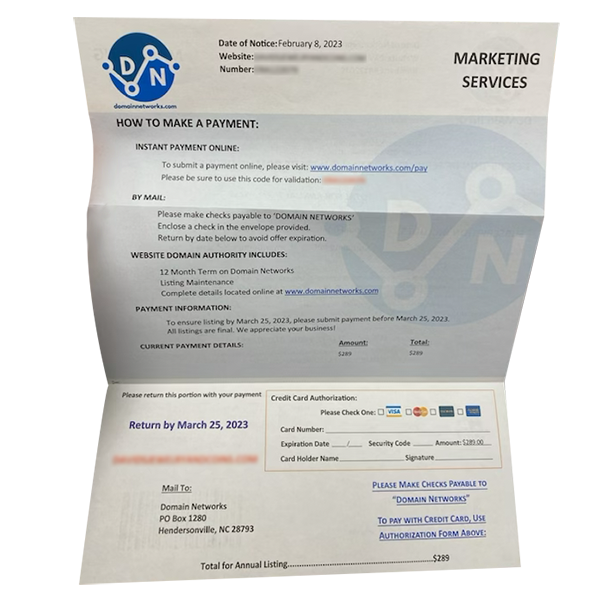
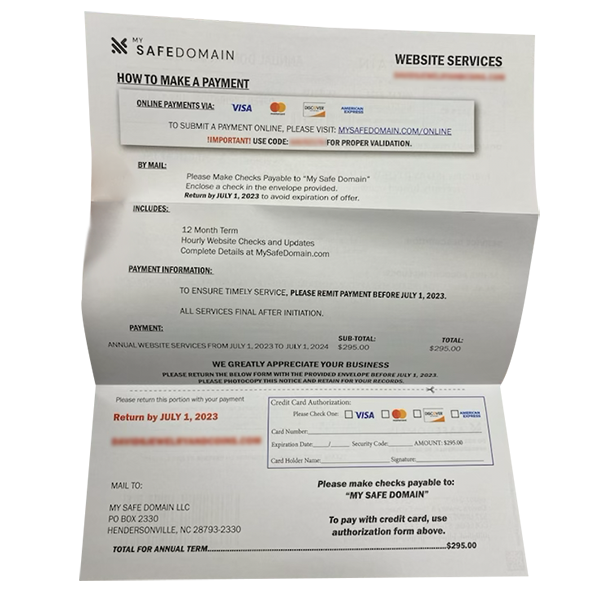
These notices are carefully designed to look like invoices. They often include your real domain name, a payment amount (usually a few hundred dollars), and language that suggests your website is at risk if you don’t act quickly.
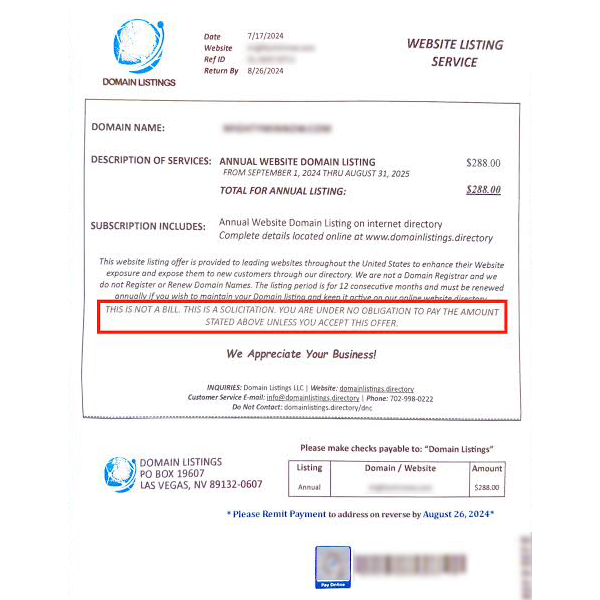
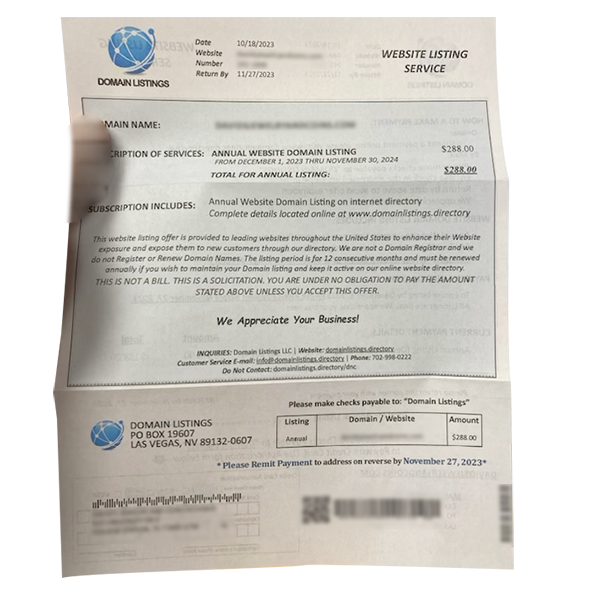
If you look closely, the wording is deliberately confusing. Instead of clearly stating that it’s renewing your domain, it references things like “domain listings” or “website listing services.” In the fine print, it becomes clear that this is simply an offer to list your website in a directory — not a renewal at all.
What You’re Actually Paying for in a Domain Name Listing Scam
This is where things get misleading. The payment isn’t being applied to your domain registration. It doesn’t extend your ownership, protect your website or keep anything from expiring. Instead, you’re paying for a marketing-style listing service that most businesses neither need nor benefit from. The structure of the letter makes it easy to miss that distinction, especially if you’re scanning quickly or handling a stack of mail. If you pay for it, your domain will not be renewed, and your website will be no more secure than before.
It’s not a valid bill. It just looks like one.
How to Tell if a Domain Renewal Notice Is a Scam
You don’t need to memorize every variation of this scam. A few simple checks can tell you everything you need to know.
Check the source.
Legitimate domain renewals come directly from your domain registrar, which is the company you originally purchased your domain from. That’s typically a platform like GoDaddy, Google Domains or another provider you recognize. These companies primarily communicate via email or your account dashboard, not through unsolicited physical mail.
Identify the sender.
If you don’t recognize the company name, that’s a strong signal to pause. Domain renewals don’t come from third-party “listing services.”
Pay attention to the language.
Real renewal notices are clear and direct. If the wording feels vague, overly formal or slightly off, that’s a clue that it’s meant to confuse you. Language you might find in a scam notice includes:
- The sender is called “Domain Listings” or a “Website Listing Service”.
- “Description of Services: Annual Website Domain Listing.”
- “The website listing offer is provided to leading websites throughout the United States to enhance their Website exposure and expose them to new customers through our directory.”
- “We are not a Domain Registrar and we do not register or renew domain names.”
- “This is not a bill. This is a solicitation. You are under no obligation to pay the amount stated above unless you accept the offer.”
Example scam renewal notices:
Check the price.
Domain renewals are usually straightforward and relatively inexpensive. If the number feels unusually high, it’s worth double-checking before doing anything else.
What to Do if You Receive a Fake Domain Renewal Notice
We see these come through regularly from clients, which is why we always recommend double-checking before taking action. If you receive one of these notices, the best first move is to go directly to the source. Log in to your domain provider account and check your renewal status there. That’s the only place you’ll find accurate, real-time information about your domain.
Final Thoughts: When It Comes to Domain Notices, Pause Before You Pay
Domain renewal scams work because they look just legitimate enough to slip through. They use familiar language, include real details about your business and create a sense of urgency that makes it easy to act quickly. But a legitimate domain renewal will always come directly from your domain provider, not a third-party company you don’t recognize.
If you take away one thing, let it be this: Don’t rely on the notice itself. Always verify through your actual domain account before making a payment.
If you’re not sure where your domain is managed, or if something doesn’t look right, you can reach out to Infomedia before making a payment. A quick second opinion can save you from paying for something that doesn’t actually protect your website.
