

Storytelling isn’t about emotion or long brand histories. It’s about structure. Learn how to use simple, strategic storytelling across your website, video and social content to build trust, improve clarity and strengthen your digital presence.
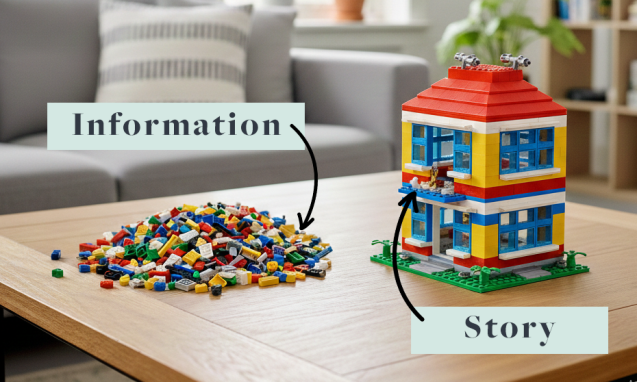
When people hear “storytelling” in marketing, they often think of long company history stories, emotional brand journeys or an overstuffed About Us page.
That’s not what we mean.
Effective storytelling isn’t about sentiment. It’s about structure. It’s how you organize information across your digital presence so people can understand what you do, why it matters and how it helps them.
When done well, storytelling creates clarity, builds trust and makes your brand easier to remember.
Storytelling Is Structure, Not a History Lesson
You don’t need to document everything that’s ever happened in your business. You’re not writing a book, and your website isn’t a timeline.
Instead, think about storytelling as the way your message shows up across touchpoints — your website, social media, videos, testimonials and even search results. Each piece plays a role in reinforcing the same core ideas.
Good storytelling answers a few consistent questions:
- Who is this for?
- What problem are they trying to solve?
- What changes after working with you?
When those answers are clear and consistent, your digital presence starts to feel intentional instead of fragmented.
Focus on Your Customer’s Story, Not Your Own
One of the most helpful frameworks for storytelling comes from Building a StoryBrand by Donald Miller. The central idea is simple: your customer is the hero of the story.
Your role is the guide. You provide clarity, tools and support that help them succeed.
This shift matters because most people aren’t looking to learn everything about your company. They’re trying to see themselves in the story. They want to know:
- “Have you helped someone like me?”
- “Do you understand my problem?”
- “Can I trust you to guide me?”
When your messaging focuses on the customer’s experience and outcome, it becomes more relevant — and more persuasive.
Use Multiple Formats to Tell the Same Story
Your story shouldn’t live in just one place or one format. In fact, it works best when it’s reinforced across multiple mediums.
- Text allows you to explain context, process and outcomes clearly.
- Photos create visual proof and emotional connection.
- Video combines both, making stories easier to consume and more engaging.
Video and photo content, in particular, can do double duty. A client story captured on video can live on your website, be clipped for social media and support campaigns across platforms. This kind of reuse strengthens your story without requiring constant new content.
Real Experiences Build Trust (and Support SEO)
Storytelling also plays a role in how search engines evaluate your content. Google’s EEAT guidelines emphasize Experience — real-world examples that demonstrate you’ve actually done the work you’re talking about. Sharing client stories, testimonials and before-and-after scenarios helps show that experience in a tangible way.
Instead of generic claims, storytelling allows you to say:
- This was the situation.
- This is what we did.
- This is what changed.
Those narratives are more credible than lists of services, and they help both users and search engines understand your value.
Story Helps People Remember
People may not remember a list of features or a block of statistics. But they do remember stories.
A simple before-and-after example — whether told through text, photos or video — gives your audience something to hold onto. It connects information to context, which makes it easier to recall later when they’re ready to make a decision.
Storytelling doesn’t have to be complicated. Often, the most effective stories are the simplest ones.
Start Simple, Stay Consistent
You don’t need a complete brand overhaul to use storytelling effectively. Start by identifying a few core stories you want to tell:
- Common client challenges
- Typical transformations
- Real experiences that reflect your expertise
From there, reinforce those stories across your digital channels using a mix of text, visuals and video. Tools like Infomedia’s Creative Marketing Toolkit, which are short videos that highlight your staff, can help capture and organize that content so it supports your website, social media and broader marketing efforts.
Storytelling isn’t about saying more. It’s about saying the right things, consistently, in a way your audience can recognize and remember. Give your message structure, and your digital presence becomes easier to understand, easier to trust and easier to remember.
